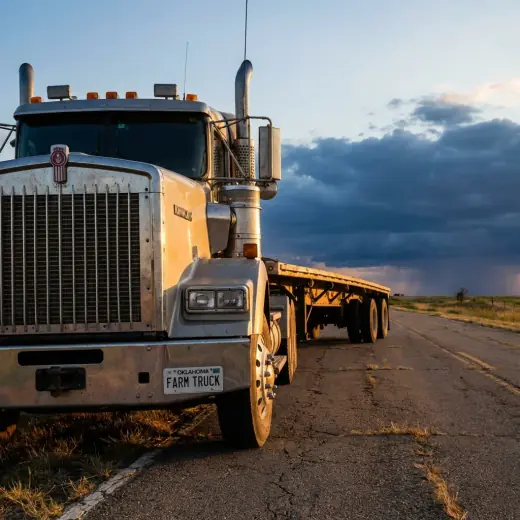
A truck rollover is often investigated through the speed for the curve and the conditions, the load, and the truck’s equipment. Federal rules require reduced speed in hazardous conditions and cargo secured so it does not shift enough to affect stability, and Oklahoma requires reduced speed on curves and in bad weather. Those records (engine data, loading paperwork, and inspection files) can close quickly, which is why a rollover is worth a prompt, careful look.
What to decide first
Confirm whether the harm, defendant, damages, and proof point toward a case that needs attorney review.
Case focus
Truck Rollover Crashes in Oklahoma
Fast attorney review, evidence control, and valuation planning for high-stakes cases.
Proof track
Evidence preservation
Witness chronology, records collection, and damages framing start early.
Attorney review
Case Review
Use the case review form or call (405) 759-0515 for direct attorney intake.
When to ask a lawyer to review your case
A high-value case is not just a big number. It often involves life-changing harm, disputed responsibility, meaningful damages, and records that need careful review. This practice area is strongest when the harm, disputed responsibility, damages, and available records support direct attorney review.
Send the key facts for attorney review.
If this involves death, catastrophic injury, a commercial defendant, or evidence that may need preservation, jump to the case-review form or call the firm.
01
Rules on speed, weather, and curves
49 CFR 392.14 states: “Extreme caution in the operation of a commercial motor vehicle shall be exercised when hazardous conditions, such as those caused by snow, ice, sleet, fog, mist, rain, dust, or smoke, adversely affect visibility or traction. Speed shall be reduced when such conditions exist. If conditions become sufficiently dangerous, the operation of the commercial motor vehicle shall be discontinued and shall not be resumed until the commercial motor vehicle can be safely operated.”
49 CFR 392.6 states: “No motor carrier shall schedule a run nor permit nor require the operation of any commercial motor vehicle between points in such period of time as would necessitate the commercial motor vehicle being operated at speeds greater than those prescribed by the jurisdictions in or through which the commercial motor vehicle is being operated.”
47 O.S. § 11-801(E) states that the driver of every vehicle shall, consistent with subsection A of that section, “drive at an appropriate reduced speed when approaching and crossing an intersection or railway grade crossing, when approaching and going around a curve, when approaching a hillcrest, when driving upon any narrow or winding roadway, and when special hazard exists with respect to pedestrians or other traffic, or by reason of weather or highway conditions.” That statute was last amended by Laws 2025, SB 375, c. 197, § 3, effective November 1, 2025.
The Commissioner of Public Safety may adopt federal motor carrier safety regulations by reference (47 O.S. § 230.4(2)). Hours-of-service questions are discussed on the truck driver fatigue page.
02
Loads and cargo securement
49 CFR 393.100(c) states: “Cargo must be contained, immobilized or secured in accordance with this subpart to prevent shifting upon or within the vehicle to such an extent that the vehicle’s stability or maneuverability is adversely affected.”
49 CFR 392.9(a)(1) provides that a driver may not operate, and a carrier may not require or permit operation, unless the commercial motor vehicle’s cargo is properly distributed and adequately secured as specified in §§ 393.100 through 393.136.
47 O.S. § 14-105(B) states: “No person shall operate on any highway any vehicle with any load unless said load and any covering thereon is securely fastened so as to prevent said covering or load from becoming loose, detached or in any manner a hazard to other users of the highway.”
03
What federal research says about why cargo tanks roll over
The FMCSA research described here is mainly research on cargo-tank rollovers.
FMCSA’s cargo-tank rollover materials describe driver error, including drowsiness or inattention, leaving the lane or a soft shoulder, riding up over a curb, or incorrectly making a turn; sudden movements; the “slosh and surge” of a liquid load; and vehicle condition, including brake defects, as issues those materials discuss. In an FMCSA fact sheet, FMCSA has also said excessive speed contributes to some rollovers, but not most. A NHTSA study quoted on an FMCSA human-factors page states that the odds of rollover increase as cargo weight increases, and that the odds were greater on ramps than in other locations. The same FMCSA fact sheet treats “most rollovers happen on curves or ramps” as a myth and says most cargo-tank rollovers happen on straight roads.
Brake issues are discussed on the truck brake failure page.
04
What crash data show
Federal crash records show the large truck itself rolled over in at least 77 fatal crashes in Oklahoma from 2020 to 2024, with at least 92 deaths (NHTSA FARS 2020–2023 final and 2024 preliminary data, queried October 29, 2026). A rollover, as FARS defines it, is any vehicle rotation of 90 degrees or more along a true longitudinal or lateral axis, and it can occur at any time in the vehicle’s sequence of events. It is not necessarily the first event or the cause.
FARS changed its rollover coding in 2022. The 2020–2021 files record tripped, untripped, or unknown-type rollovers; the 2022–2024 files record a single “Rollover” code. Both sets are included, so the combined 2020–2024 count is not comparable year to year.
Method note: Oklahoma crashes, 2020–2024, in which a large truck (FARS body types 60–64, 66, 67, 71, 72, 78) has a rollover recorded (2020–2021 codes 1, 2, or 9; 2022–2024 code 3). Deaths are all deaths in those crashes. Each crash is counted once.
05
Evidence to request early
A rollover file often turns on how fast the truck entered the curve, how the cargo was loaded and secured, and the condition of the equipment. Engine and ECM data (speed, steering events where recorded, and braking around the curve or ramp), bills of lading, scale tickets, and load-distribution records, cargo-securement equipment and how the load was blocked, tire and brake inspection files, weather at the curve or hill, and photographs of the rollover path or a soft shoulder can all matter. Loading and securement records can be discarded after a haul, so ask for them promptly. See spoliation of evidence and truck accident investigation.
People who may be responsible, depending on the facts, include the driver; the motor carrier (schedules, maintenance, training); a shipper or loader if the load was improperly distributed or secured; a maintenance shop; and, in some cases, a broker. See the broker liability page.
Related pages: the truck accident hub and what to do after a truck crash.
06
About the reviewing attorney
Jason Hicks is a battle-tested Oklahoma trial lawyer who won a $126 million jury verdict.
We handle cases on a contingency fee. If there’s no recovery, there’s no fee. We front the case costs.
Have Jason Hicks review your crash at no charge.
Jason Hicks is an Oklahoma truck-wreck trial lawyer.
07
Sources
- 49 CFR 392.14, 392.6, 392.9(a)(1), 393.100(c).
- 47 O.S. § 11-801(E); 47 O.S. § 14-105(B); 47 O.S. § 230.4(2).
- NHTSA FARS 2020–2023 final and 2024 preliminary data, queried October 29, 2026.
- FMCSA cargo-tank rollover materials (fact sheet, 2007 roll-stability study, prevention page).
This is general information, not legal advice for your situation.
Evidence and Next Steps
Use these resources to move from general information to the records, proof, and case-review steps that fit the matter.
Request Case Review
Request a review if records, deadlines, or insurance contact may affect this truck rollover crashes in oklahoma matter.
Review Request Case ReviewCase Results
Compare documented outcomes that show how similar proof translated into value.
Review Case ResultsHicks Legal Journal
Use supporting analysis and client-facing reference material to understand the next evidence and timing issues.
Review Hicks Legal JournalClient Guides
Use supporting analysis and client-facing reference material to understand the next evidence and timing issues.
Review Client GuidesResource Library
Use supporting analysis and client-facing reference material to understand the next evidence and timing issues.
Review Resource LibraryAttorney Profile
Review trial counsel background and the firm posture behind this practice area.
Review Attorney ProfileTrust Center
Check the firm standards, review process, and proof posture before deciding.
Review Trust CenterPersonal Injury Overview
Open the next resource that best matches this truck rollover crashes in oklahoma case.
Review Personal Injury Overview