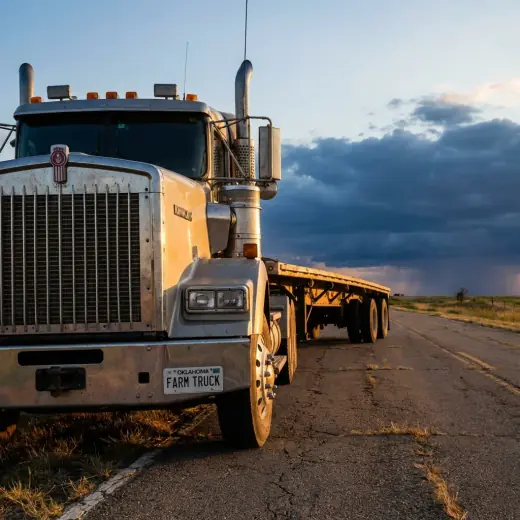
Oklahoma law bars following more closely than is reasonable and prudent. A truck with more than six tires must stay at least 300 feet behind another such vehicle except when passing, and every driver must be able to stop within the assured clear distance ahead. In a rear-end crash involving a large truck, the truck’s electronic data, cameras, and logs often show speed, following distance, and braking. Those records can close quickly, so they are worth asking about early, whether the truck struck the vehicle ahead or was struck from behind.
What to decide first
Confirm whether the harm, defendant, damages, and proof point toward a case that needs attorney review.
Case focus
Rear-End Truck Crashes in Oklahoma
Fast attorney review, evidence control, and valuation planning for high-stakes cases.
Proof track
Evidence preservation
Witness chronology, records collection, and damages framing start early.
Attorney review
Case Review
Use the case review form or call (405) 759-0515 for direct attorney intake.
When to ask a lawyer to review your case
A high-value case is not just a big number. It often involves life-changing harm, disputed responsibility, meaningful damages, and records that need careful review. This practice area is strongest when the harm, disputed responsibility, damages, and available records support direct attorney review.
Send the key facts for attorney review.
If this involves death, catastrophic injury, a commercial defendant, or evidence that may need preservation, jump to the case-review form or call the firm.
01
Oklahoma’s following-distance law
47 O.S. § 11-310(a) states: “The driver of a motor vehicle shall not follow another vehicle more closely than is reasonable and prudent, having due regard for the speed of such vehicles and the traffic upon and the condition of the highway.”
Section 11-310(c) states: “No vehicle which has more than six tires in contact with the road shall approach from the rear of another vehicle which has more than six tires in contact with the road closer than three hundred (300) feet except when passing the vehicle.” That 300-foot rule is a truck-behind-truck rule. It is not a 300-foot rule for a truck behind a car.
47 O.S. § 11-801(A) states: “No person shall drive any vehicle upon a highway at a speed greater than will permit the driver to bring it to a stop within the assured clear distance ahead.” That section was last amended by Laws 2025, SB 375, c. 197, § 3, effective November 1, 2025. It applies to every driver, car or truck.
Section 11-310 also addresses truck-behind-truck spacing outside business and residential districts “so that an overtaking vehicle may enter and occupy such space without danger,” and it has a two-vehicle electronically coordinated “platoon” exception for “not more than two motor vehicles.”
02
Federal rules on speed and conditions
49 CFR 392.14 states: “Extreme caution in the operation of a commercial motor vehicle shall be exercised when hazardous conditions, such as those caused by snow, ice, sleet, fog, mist, rain, dust, or smoke, adversely affect visibility or traction. Speed shall be reduced when such conditions exist.”
49 CFR 392.6 states: “No motor carrier shall schedule a run nor permit nor require the operation of any commercial motor vehicle between points in such period of time as would necessitate the commercial motor vehicle being operated at speeds greater than those prescribed by the jurisdictions in or through which the commercial motor vehicle is being operated.”
Those federal rules apply to interstate carriers. The Commissioner of Public Safety may adopt federal motor carrier safety regulations by reference (47 O.S. § 230.4(2)). 47 O.S. § 11-310 applies to every driver.
If hours of service come up, the federal 11-hour driving limit and the 30-minute break are for interstate drivers. For drivers working solely within Oklahoma, state law allows up to 12 hours of driving (non-hazmat) and does not enforce the 30-minute break (47 O.S. §230.15(D)). See the truck driver fatigue page.
03
What crash data show
Federal crash records show a large truck was one of the two vehicles in the first harmful event of a front-to-rear collision in at least 95 fatal crashes in Oklahoma from 2020 to 2024, with at least 107 deaths (NHTSA FARS 2020–2023 final and 2024 preliminary data, queried October 29, 2026).
In at least 41 of those crashes (47 deaths), the truck’s front made that first contact; in at least 67 (77 deaths), the truck’s rear did. Some crashes involved more than one truck, so the two groups overlap (13 crashes are in both) and are not added.
These figures count only crashes in which a large truck was one of the two vehicles in the first harmful event of a front-to-rear collision. They support a statement that the truck struck the vehicle ahead, or was struck from behind. Rear-end collisions later in a crash sequence are not captured, so the counts are minimums.
Method note: Oklahoma crashes, 2020–2024 (2024 preliminary), with Manner of Collision 01 (Front-to-Rear) in which a large truck (FARS body types 60–64, 66, 67, 71, 72, 78) is one of the two vehicles in the first harmful event. Front/rear subsets use that truck’s area of impact in the first harmful event (12 = front, 06 = rear). Each crash is counted once; deaths are all deaths in the crash.
04
When a car hits the back of a truck
Fault is not automatic when a car strikes the rear of a truck. Facts that may matter include a truck stopped or slowed in a travel lane, hazard warnings, lighting or reflective tape, a speed difference on a grade, and the condition of a rear guard. Rear-impact-guard rules are discussed on the underride page. A truck that could not stop is discussed on the brake failure page.
05
Evidence to request early, and who may be responsible
A rear-end file often turns on following distance, brake application, and whether the truck was the striking or struck vehicle. Engine, ECM, and brake data (speed, throttle, and brake application), forward-camera and collision-mitigation event data, ELD records, dispatch messages, phone records, maintenance and inspection records, pavement marks, rear-guard condition, scene photos, and the crash report can all matter. Oklahoma Highway Patrol has primary authority over traffic offenses on interstate highways. State law directs OHP "To investigate and report traffic collisions on all interstate and defense highways and on all highways outside of incorporated municipalities" (47 O.S. § 2-117(B)(10)). A formal Attorney General opinion issued August 27, 2025 (2025 OK AG 11) says the authority of sheriffs and municipal police on those roads is supplemental. Check the agency named on your paperwork. Collision-mitigation event files and ECM brake traces can be overwritten, so request them promptly. See spoliation of evidence and truck accident investigation.
People who may be responsible, depending on the facts, include the driver; the motor carrier (schedules, hiring, and supervision); a maintenance shop; and, in some cases, a broker or shipper. See negligent hiring and broker liability. 49 CFR 383.51(c), Table 2, lists “Following the vehicle ahead too closely” as a serious traffic violation; a second conviction of any combination of the serious violations in that table, in a separate incident within a three-year period while operating a CMV, brings a 60-day disqualification, and a third brings 120 days.
Related pages: the truck accident hub and what to do after a truck crash.
06
About the reviewing attorney
Jason Hicks is a battle-tested Oklahoma trial lawyer who won a $126 million jury verdict.
We handle cases on a contingency fee. If there’s no recovery, there’s no fee. We front the case costs.
Have Jason Hicks review your crash at no charge.
Jason Hicks is an Oklahoma truck-wreck trial lawyer.
07
Sources
- 47 O.S. § 11-310(a), (c); 47 O.S. § 11-801(A); 47 O.S. § 230.15(D).
- 49 CFR 392.14, 392.6, 383.51(c) Table 2.
- 47 O.S. § 230.4(2).
- NHTSA FARS 2020–2023 final and 2024 preliminary data, queried October 29, 2026.
This is general information, not legal advice for your situation.
Evidence and Next Steps
Use these resources to move from general information to the records, proof, and case-review steps that fit the matter.
Request Case Review
Request a review if records, deadlines, or insurance contact may affect this rear-end truck crashes in oklahoma matter.
Review Request Case ReviewCase Results
Compare documented outcomes that show how similar proof translated into value.
Review Case ResultsHicks Legal Journal
Use supporting analysis and client-facing reference material to understand the next evidence and timing issues.
Review Hicks Legal JournalClient Guides
Use supporting analysis and client-facing reference material to understand the next evidence and timing issues.
Review Client GuidesResource Library
Use supporting analysis and client-facing reference material to understand the next evidence and timing issues.
Review Resource LibraryAttorney Profile
Review trial counsel background and the firm posture behind this practice area.
Review Attorney ProfileTrust Center
Check the firm standards, review process, and proof posture before deciding.
Review Trust CenterPersonal Injury Overview
Open the next resource that best matches this rear-end truck crashes in oklahoma case.
Review Personal Injury Overview