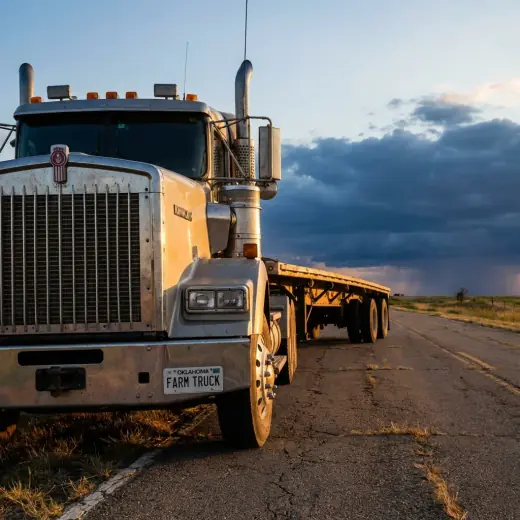
When a semi jackknifes, the trucking company may blame an icy road or a car that cut in front of the truck. The facts that test that story are mostly in the company's own hands: the engine computer's speed and braking data, the driver's electronic hours log and qualification file, the truck's repair records and any dash-camera video. Federal rules let a carrier throw some of those records out after a few months, and engine data or video can be recorded over once the truck is repaired or put back on the road. A written request to keep that evidence, sent early, is how you hold on to the proof your claim may need.
What to decide first
Confirm whether the harm, defendant, damages, and proof point toward a case that needs attorney review.
Case focus
Jackknife Truck Crashes in Oklahoma
Fast attorney review, evidence control, and valuation planning for high-stakes cases.
Proof track
Evidence preservation
Witness chronology, records collection, and damages framing start early.
Attorney review
Case Review
Use the case review form or call (405) 759-0515 for direct attorney intake.
When to ask a lawyer to review your case
A high-value case is not just a big number. It often involves life-changing harm, disputed responsibility, meaningful damages, and records that need careful review. This practice area is strongest when the harm, disputed responsibility, damages, and available records support direct attorney review.
Send the key facts for attorney review.
If this involves death, catastrophic injury, a commercial defendant, or evidence that may need preservation, jump to the case-review form or call the firm.
01
What a jackknife is
In a jackknife, the trailer stops tracking straight behind the tractor. The two fold toward each other at the coupling, and the trailer can swing across one lane or several. FMCSA's crash tables sort jackknifes into two kinds. In some, the jackknife was the first thing that went wrong. In others it happened later, after an earlier impact.
That difference matters for your claim. A jackknife that followed a collision may be a result of the crash and not its cause, so the order of events has to be pinned down before anyone can say who is at fault.
Nationwide in 2020, 169 of the 4,842 large trucks involved in fatal crashes jackknifed. In 27 of them the jackknife was the first event, and in 142 it came later in the crash (FMCSA, Large Truck and Bus Crash Facts, Vehicles Table 17, 2020). FMCSA counts a truck as "large" when its gross vehicle weight rating is over 10,000 pounds.
02
Federal rules a jackknife case turns on
No single cause explains every jackknife. These are the federal safety rules a lawyer usually checks first, and each one points to records the carrier should have.
Speed for the conditions
Truck drivers must use "extreme caution" when snow, ice, sleet, fog, mist, rain, dust or smoke affect visibility or traction, and "Speed shall be reduced when such conditions exist" (49 CFR 392.14). The same rule says that if conditions become sufficiently dangerous, the truck has to stop until it can be operated safely. A carrier also may not schedule a run so tight that the driver would have to exceed the speed limits along the route (49 CFR 392.6).
Brakes and the coupling
Every brake a truck is equipped with "must at all times be capable of operating" (49 CFR 393.48(a)), subject to narrow exceptions. Carriers must systematically inspect, repair and maintain the trucks they control (49 CFR 396.3(a)). Drivers write up a vehicle inspection report at the end of each day's work, and it must cover the service brakes, including trailer brake connections, and the coupling devices (49 CFR 396.11(a)(1)). If a jackknife started with a brake problem, those reports and the shop records are where it tends to show up. See when truck brakes fail.
The load
Cargo must be "contained, immobilized or secured" so it doesn't shift "to such an extent that the vehicle's stability or maneuverability is adversely affected" (49 CFR 393.100(c)). Loading papers help show who loaded the trailer and who secured it. More on that at overweight loads and cargo securement.
Weather and driving hours
Bad weather is something to investigate, not an automatic excuse. A driver who runs into adverse driving conditions may drive up to two extra hours to finish the run or reach a safe place (49 CFR 395.1(b)(1)). But the federal definition covers only conditions that "were not known, or could not reasonably be known" to the driver before the duty day began, or to the carrier before it dispatched the driver (49 CFR 395.2). A forecast ice storm may not qualify. Separately, no driver may operate a truck while too tired or ill to drive safely, and no carrier may require or permit it (49 CFR 392.3). See federal hours-of-service limits.
This is general information, not legal advice for your situation.
03
The records that show why a truck jackknifed, and how long they're kept
Most of the proof sits with the trucking company. Federal rules set a minimum keep period for some of it. The rules in this table say nothing about engine data or camera video, which is one more reason to ask for everything in writing right away.
| Record | Federal rule | How long the rule says the carrier keeps it |
|---|---|---|
| Driver's hours-of-service (ELD) records and supporting documents | 49 CFR 395.8(k)(1) | "for a period of not less than 6 months from the date of receipt" |
| Driver vehicle inspection reports and repair certifications | 49 CFR 396.11(a)(4) | "for three months from the date the written report was prepared" |
| Inspection, repair and maintenance records | 49 CFR 396.3(c) | "for a period of 1 year and for 6 months after the motor vehicle leaves the motor carrier's control" |
| Driver qualification file | 49 CFR 391.51(c) | "for as long as a driver is employed by that motor carrier and for three years thereafter" (some items may come out after three years, 391.51(d)) |
For the full list of records a carrier should keep after a crash, see our guide to preserving truck crash evidence.
Other proof lives outside the company: tire marks and gouges, where each vehicle came to rest, photos and video from people at the scene, and weather records for that hour and place. The truck and trailer themselves are evidence too, so ask that they not be repaired or sold before an inspection.
What to do next: put the request in writing, early, and name each record. Two pages walk through it: your first steps after a truck crash and what a truck's black box records.
04
When a jackknife causes a pileup
A trailer sideways across the interstate can block several lanes, and the vehicles behind it may hit the trailer or each other. Each impact gets examined in order: which vehicle struck which, and when. See semi crashes on I-35 and truck wrecks along I-40 for those corridors.
Oklahoma compares fault. Your own negligence doesn't bar recovery unless it is "of greater degree" than the negligence of whoever caused the harm, or of all of them combined (23 O.S. §13), and any award is reduced in proportion to your share (23 O.S. §14). For claims that arose on or after November 1, 2011, each defendant is generally liable only for the share of damages assigned to it (23 O.S. §15). That is why every company that played a part needs to be identified.
05
Who may be responsible
Depending on the facts, responsibility can reach:
- The driver, for driving too fast for the road or following too closely.
- The motor carrier, for its schedules and upkeep (49 CFR 392.6, 396.3) and for how it hired and supervised the driver.
- The shipper or loader, if cargo was loaded or secured badly. Who actually loaded the trailer decides this.
- A repair shop, if brake or coupling work was done wrong.
- A freight broker, in some cases, depending on its role. See when a broker or shipper shares the blame.
06
How long you have to file
Most Oklahoma injury lawsuits must be filed within two years (12 O.S. §95(A)(3)). Exceptions can move that date, so get the deadline for your own case confirmed early. The record clocks above often run out well before it.
07
Talk with a lawyer about your jackknife crash
Jason Hicks is a battle-tested Oklahoma trial lawyer who won a $126 million jury verdict.
We handle cases on a contingency fee. If there’s no recovery, there’s no fee. We front the case costs.
Have Jason Hicks review your crash at no charge.
Jason Hicks is an Oklahoma truck-wreck trial lawyer.
This page is general information, not legal advice. Reading it does not form an attorney-client relationship.
Evidence and Next Steps
Use these resources to move from general information to the records, proof, and case-review steps that fit the matter.
Request Case Review
Request a review if records, deadlines, or insurance contact may affect this jackknife truck crashes in oklahoma matter.
Review Request Case ReviewCase Results
Compare documented outcomes that show how similar proof translated into value.
Review Case ResultsHicks Legal Journal
Use supporting analysis and client-facing reference material to understand the next evidence and timing issues.
Review Hicks Legal JournalClient Guides
Use supporting analysis and client-facing reference material to understand the next evidence and timing issues.
Review Client GuidesResource Library
Use supporting analysis and client-facing reference material to understand the next evidence and timing issues.
Review Resource LibraryAttorney Profile
Review trial counsel background and the firm posture behind this practice area.
Review Attorney ProfileTrust Center
Check the firm standards, review process, and proof posture before deciding.
Review Trust CenterPersonal Injury Overview
Open the next resource that best matches this jackknife truck crashes in oklahoma case.
Review Personal Injury Overview