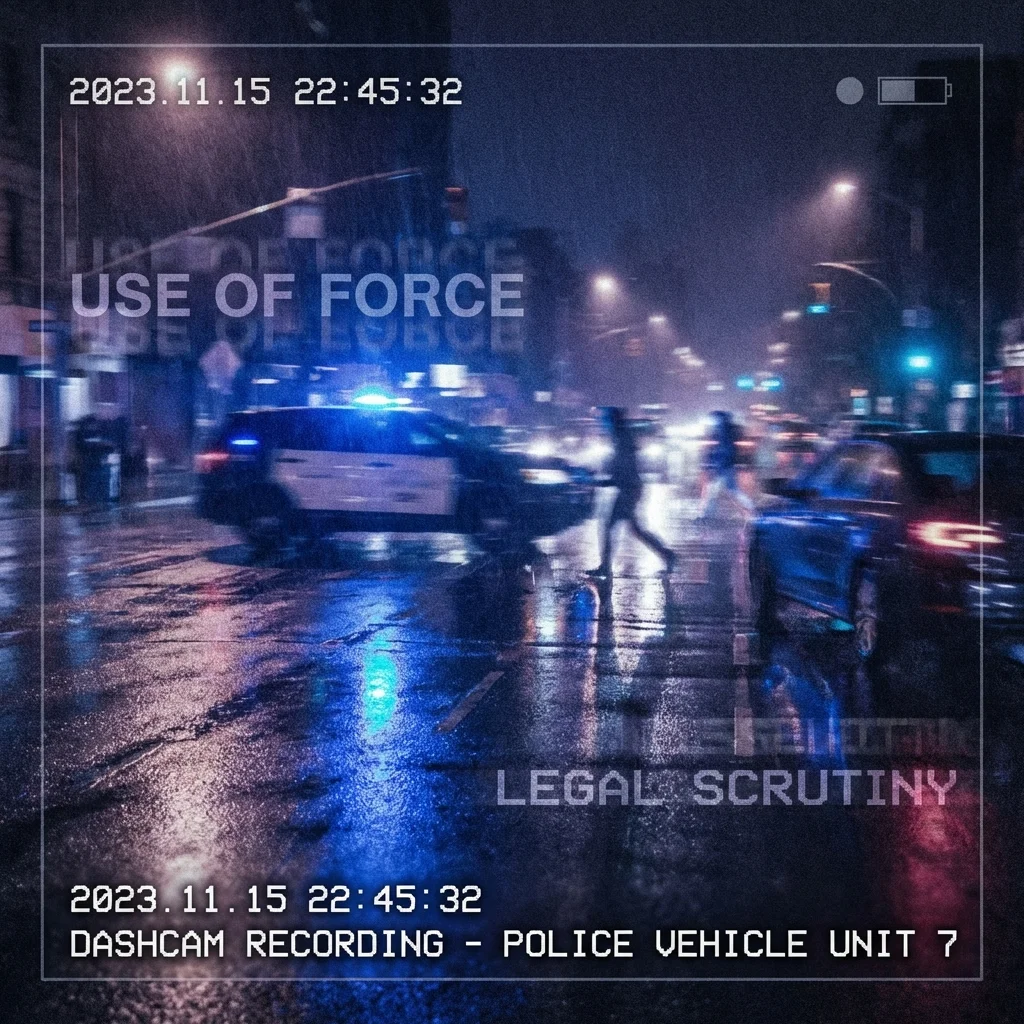
I. Introduction: The "Escher Staircase" of Qualified Immunity
Since the Supreme Court's decision in Harlow v. Fitzgerald (1982), the doctrine of Qualified Immunity has evolved from a limited procedural shield into a near-absolute bar to accountability. The doctrine protects government officials from liability unless their conduct violates a "clearly established" statutory or constitutional right. Proving this requires a plaintiff to identify a pre-existing case with "materially similar" facts where an officer was held liable. This creates a circular absurdity: because courts often grant immunity without ruling on the underlying constitutionality of the conduct (under the Pearson v. Callahan discretion), the law never becomes "clearly established." Novel forms of brutality thus remain permanently immune, trapped in what legal scholars call the "Escher Staircase" of civil rights jurisprudence.
However, the 10th Circuit Court of Appeals—which holds jurisdiction over Oklahoma—has recently begun to chip away at this monolith, particularly in the context of Taser usage. The court has signaled that the gratuitous use of electrical weapons on non-threatening subjects is not only unconstitutional but "clearly" so, stripping officers of their immunity shield.
II. The Pivot: Active vs. Passive Resistance
The central inquiry in excessive force analysis is the "Graham Factors" derived from Graham v. Connor (1989), principally whether the suspect poses an immediate threat to the safety of officers or others. In applying this to Tasers, the 10th Circuit has drawn a sharp line between "Active Resistance" and "Passive Resistance."
Active Resistance implies a physical threat or an attempt to flee—kicking, punching, or running. In these scenarios, courts generally defer to the officer's use of a Taser to effectuate an arrest. However, Passive Resistance involves non-compliance without aggression: going limp, refusing to exit a vehicle, or locking arms. In Perea v. Baca and subsequent rulings, the 10th Circuit has held that using a Taser on a passively resisting subject is disproportionate and therefore unconstitutional. Unlike a baton or pepper spray, which are compliance tools, a Taser is an "intermediate" weapon capable of causing excruciating pain and cardiac complications. Its use against a citizen who is merely refusing to move is now widely recognized as a Fourth Amendment violation.
III. Forensic Analysis: The "Cycling" Violation
One of the most common forms of abuse is "cycling"—the repeated deployment of the Taser on a single subject. A standard Taser cycle lasts 5 seconds. Officers trained in "pain compliance" may pull the trigger multiple times in rapid succession. The 10th Circuit has established that force must be re-evaluated after every cycle. If a suspect is tased, falls to the ground, and is no longer resisting, a second taser cycle is excessive.
Litigating this requires a forensic download of the Taser's firing log. This internal data reveals exactly when the trigger was pulled and for how long. In a recent case, we analyzed logs showing a 5-second shock, a 1-second pause, and another 5-second shock. The officer claimed the suspect was "still fighting." The body camera video, synchronized with the Taser log, showed the suspect was convulsing on the pavement during the pause. The "fight" was actually the involuntary neuromuscular incapacitation caused by the weapon. This evidence proved that the officer was shocking a helpless subject, piercing his Qualified Immunity.
IV. The Affirmative Duty to Warning
A critical, often overlooked element of 10th Circuit jurisprudence is the requirement to warn. The court has held that, where feasible, an officer must warn a suspect that they are about to be tased and give them a chance to comply. A warning given simultaneously with the discharge is effectively no warning at all.
We utilize audio spectral analysis of body camera footage to measure the precise latency between the verbal command ("Taser! Taser!") and the audible "click" of the weapon's deployment. If the gap is less than 1.5 seconds, we argue that the officer failed to provide a meaningful opportunity for compliance. This transforms the warning into a mere performative utterance, insufficient to satisfy the constitutional requirement. In the chaotic environment of a police encounter, these milliseconds are the difference between a lawful arrest and a constitutional tort.
V. Conclusion
Qualified immunity is a demanding defense, but excessive-force cases still turn on the specific mechanics of the encounter. The distinction between active and passive resistance, the timing of Taser cycles, the feasibility of warnings, and the medical record can all affect whether force was objectively reasonable under clearly established law. Careful review of those records is the starting point for evaluating accountability.