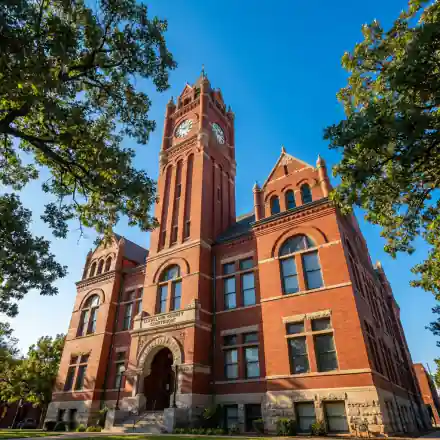
Historic Oklahoma courthouse exterior

Uninsured Motorist Accidents

Proof priority

Evidence preservation, valuation discipline, and fast attorney review.

Coverage review for crashes involving uninsured, underinsured, or unidentified drivers.

Evidence preservation, valuation discipline, and fast attorney review.

Evidence preservation, valuation discipline, and fast attorney review.

When the driver who hit you has no insurance or not enough insurance, your own UM/UIM policy may matter. We review the available policies, coverage layers, and deadlines before any release is signed.

What to decide first

Confirm whether the harm, defendant, damages, and proof point toward a case that needs attorney review.

Case focus

Uninsured & Underinsured Motorist

Coverage review for crashes involving uninsured, underinsured, or unidentified drivers.

Proof track

Evidence preservation

Witness chronology, records collection, and damages framing start early.

Attorney review

Request Case Review

Use the case review form or call (405) 759-0515 for direct attorney intake.

When uninsured & underinsured motorist needs attorney review

A high-value case is not just a big number. It often involves life-changing harm, disputed responsibility, meaningful damages, and records that need careful review. This practice area is strongest when the harm, disputed responsibility, damages, and available records support direct attorney review.

Send the key facts for attorney review.

If this involves death, catastrophic injury, a commercial defendant, or evidence that may need preservation, jump to the case-review form or call the firm.

01

What is UM/UIM Coverage?

Uninsured Motorist (UM) coverage pays for your medical bills and pain and suffering if the at-fault driver has no insurance. Underinsured Motorist (UIM) kicks in when the at-fault driver has insurance, but it's not enough to cover your damages (e.g., they have the state minimum of $25,000).

02

"Stacking" Your Policies

If you have multiple vehicles with UM coverage, Oklahoma law may allow you to "stack" them. For example, if you have 3 cars with $25,000 UM each, you might have access to $75,000 in total coverage.

We also look at:

  • Multiple vehicles on your policy
  • Other household policies
  • Umbrella policies

We identify available coverage and the records needed to evaluate the claim.

03

Will My Rates Go Up?

No. Oklahoma law prohibits insurance companies from raising your rates for filing a UM/UIM claim if the accident was not your fault.

04

Hit and Run Cases

If you are the victim of a hit-and-run, your UM coverage may be important. The policy, facts, notice requirements, and available records should be reviewed even if the other driver is not found.

05

Evidence and Next Steps

Use these resources to move from general information to the records, proof, and case-review steps that fit the matter.

Request Case Review

Request a review if records, deadlines, or insurance contact may affect this uninsured & underinsured motorist matter.

Review Request Case Review

Case Results

Compare documented outcomes that show how similar proof translated into value.

Review Case Results

Hicks Legal Journal

Use supporting analysis and client-facing reference material to understand the next evidence and timing issues.

Review Hicks Legal Journal

Client Guides

Use supporting analysis and client-facing reference material to understand the next evidence and timing issues.

Review Client Guides

Resource Library

Use supporting analysis and client-facing reference material to understand the next evidence and timing issues.

Review Resource Library

Attorney Profile

Review trial counsel background and the firm posture behind this practice area.

Review Attorney Profile

Trust Center

Check the firm standards, review process, and proof posture before deciding.

Review Trust Center

Personal Injury Overview

Open the next resource that best matches this uninsured & underinsured motorist case.

Review Personal Injury Overview

Request Case Review

Attorneys Review Every Submission

Tell Us What Happened

Step 2 of 2

Provide as much detail as possible to accelerate attorney review.

What Happens Next?
  • Attorney review (not a call center).
  • Immediate conflict check.
  • Confidential plan of action.

Request Uninsured & Underinsured Motorist Case Review

Share case facts now so we can begin evidence-preservation and qualification review.

Start with the facts

A clear summary of what happened, who was involved, and what evidence may exist is enough to begin.

Confidential review

The firm reviews your information and responds if the matter appears to fit.

Evidence and timing

Dates, locations, records, photos, video, and witness names help us understand what may need to be preserved.

How to reach you

Tell us how to reach you and when you are available for follow-up.

Contingency-fee representation may be available. Submitting this form does not create an attorney-client relationship.

Phone Review Option

For severe injury, wrongful death, or evidence-loss risk, a phone review may help identify preservation steps.

Call (405) 759-0515

Common Questions

Can my own insurance company deny my UM claim?

They can dispute liability or damages, but they cannot unreasonably deny a valid claim. If they act in bad faith, you may have additional claims against them.

What if I'm hit by a hit-and-run driver?

UM coverage typically applies to hit-and-run accidents where the at-fault driver cannot be identified. There may be additional requirements like reporting to police.

Attorney Review Criteria for Uninsured & Underinsured Motorist

We focus on high-impact claims where evidence, legal strategy, and trial preparation materially change outcomes.

This section is designed for families comparing firms based on litigation depth, not marketing volume. Use it to evaluate whether your claim has the severity, proof path, and timeline urgency required for full trial-level development.

When Attorney Review May Be Important

We qualify cases by objective factors that drive recoverable value and courtroom credibility.

  • - Coverage dispute, denial, delay, or unfair valuation.
  • - Severe injury or loss with meaningful policy exposure.
  • - Need for policy interpretation and bad-faith strategy.

Evidence and Investigation Priorities

We map immediate records that can be lost through short retention windows or delayed disclosure.

  • - Policy language, reservation letters, and claims timeline records.
  • - Communication logs proving delay, denial, or lowball handling.
  • - Damages records supporting full value and bad-faith exposure.

Damages and Value Drivers

We value claims from records and long-term impact models, not quick-adjuster formulas.

  • - Contract damages plus potential extra-contractual recovery.
  • - Medical, wage, and long-tail future loss components.
  • - Carrier conduct that increases settlement pressure.

Defense Tactics and Rebuttal Focus

Anticipating defense themes early protects settlement leverage and trial positioning.

  • - Coverage reinterpretation that narrows policy obligations after loss occurs.
  • - Repeated documentation loops to manufacture claim delay and claimant fatigue.
  • - Partial-payment strategies used to create leverage for discounted global releases.

Evidence Preservation Window and Timeline

High-value litigation depends on preserving digital, medical, and witness evidence early. We start with early preservation notices, then sequence liability and damages proof before defense narratives harden.

Delays can reduce case value. A structured timeline allows us to prove what happened, who knew what, and when each party failed to act. That chronology becomes the foundation for both settlement pressure and trial testimony.

What Happens Next

  1. Policy and claim file review with strategy call.
  2. Demand and documentation package.
  3. Litigation and discovery if carrier refuses fair handling.

Damages Documentation Checklist

Serious-value recovery depends on record quality. Keep a disciplined file of provider notes, specialist recommendations, work restrictions, wage-loss records, and day-to-day functional impacts. This record set is often decisive when insurers challenge severity or duration.

We align each damages category with admissible proof so valuation reflects true long-term consequences, not a short-term snapshot created before treatment stabilization.

Liability Framework and Proof

We align every allegation with objective records, timeline evidence, and expert testimony. The goal is not volume; it is documented proof that can withstand aggressive defense motions.

Local Venue and Process Context

Oklahoma venue selection, filing sequence, and early motion practice can materially change leverage. We build each case for the forum that best supports documented recovery.

Common Questions

These questions reflect the most common decision points in high-stakes injury and civil-rights case review.

Can I challenge a low offer from my own carrier?

Yes. Carriers owe good-faith handling obligations and can be held accountable when they breach them.

What records matter most in bad-faith cases?

Claim timelines, written communications, policy terms, and objective proof of damages.

Should I accept a quick settlement?

Not before full value analysis. Quick offers often waive stronger claims.

Do I pay upfront legal fees?

Bad-faith insurance cases are reviewed for contingency-fee representation, and the fee terms are explained before representation begins.