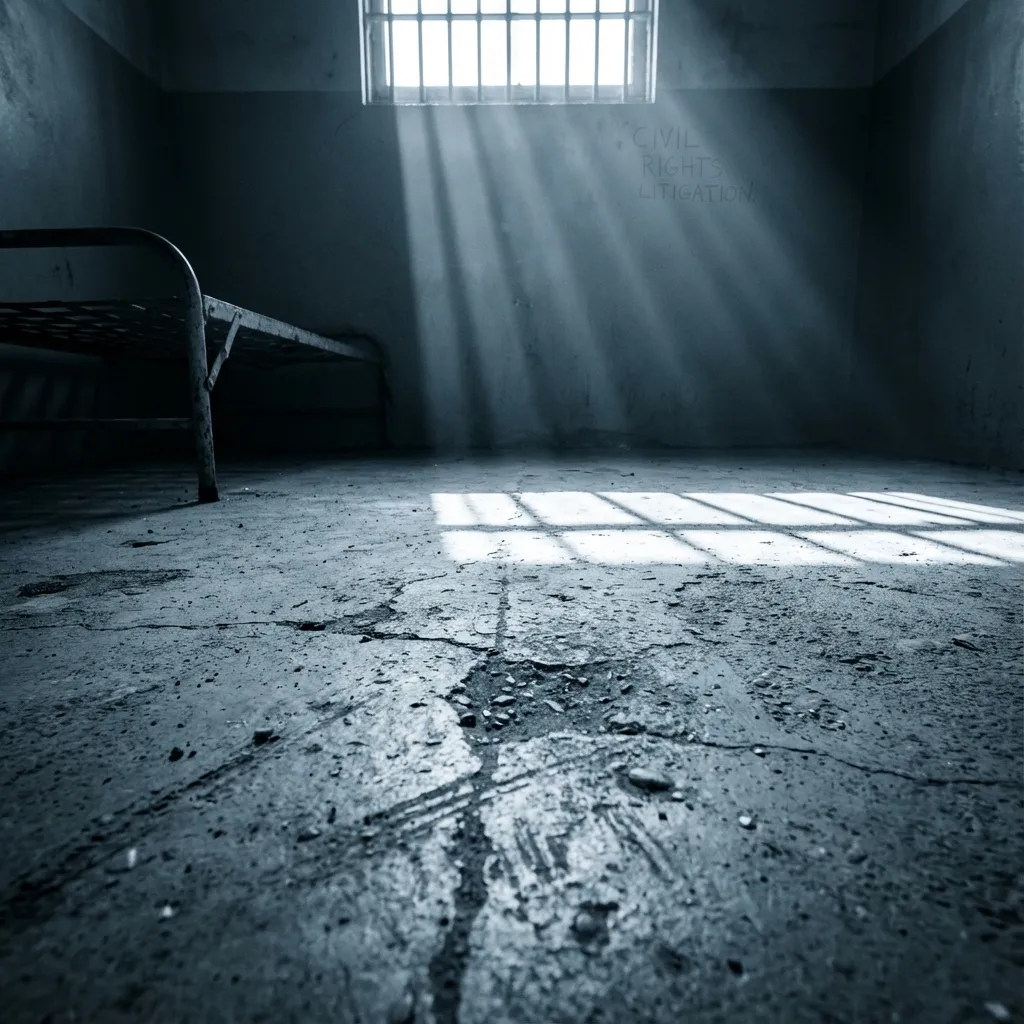
Jails are dangerous places, but that does not give the government a free pass to ignore violence. When officials know an inmate is in danger and refuse to act, they are crossing the line from negligence to a constitutional violation.
What to decide first
Confirm whether the harm, defendant, damages, and proof point toward a case that needs attorney review.
Case focus
Civil Rights
Fast attorney review, evidence control, and valuation planning for high-stakes cases.
Proof track
Evidence preservation
Witness chronology, records collection, and damages framing start early.
Attorney review
Request Case Review
Use the case review form or call (405) 759-0515 for direct attorney intake.
When failure to protect: jail violence is not "part of the punishment" needs attorney review
A high-value case is not just a big number. It often involves life-changing harm, disputed responsibility, meaningful damages, and records that need careful review. This practice area is strongest when the harm, disputed responsibility, damages, and available records support direct attorney review.
Send the key facts for attorney review.
If this involves death, catastrophic injury, a commercial defendant, or evidence that may need preservation, jump to the case-review form or call the firm.
What a $2 million Oklahoma County jail death verdict shows about proof.
The Davis verdict was built from records, medical proof, witness testimony, jail-policy work, and trial command. Families with serious custody-death or ignored-medical-care questions can use the article to see what must be preserved and tested early.
- Cell-check logs, medical records, policy evidence, and deposition testimony matter.
- Section 1983 jail death cases require notice, causation, and deliberate-indifference proof.
- Past results do not guarantee future outcomes; every case turns on its own evidence.
01
Legal Duty to Prevent Violence
Under the "Failure to Protect" theory of liability (8th Amendment for prisoners, 14th Amendment for detainees), a jail or prison official can be held liable if they knew an inmate faced a substantial risk of serious harm and failed to take reasonable measures to abate it.
This is not about stopping every fight. It is about stopping the preventable ones.
02
Grounds for a Lawsuit
- Placement with Known Enemies: Putting a non-violent offender in a cell with a known violent gang member or someone with a "keep separate" order.
- Ignoring Threats: If an inmate reports specific threats (e.g., being labeled a "snitch" or "rat") and guards ignore it or mock the inmate.
- Understaffing: Leaving housing pods completely unsupervised for hours, creating conditions where assaults can become foreseeable and preventable risks.
- Facilitating Assaults: ("Gladiator Fights") - When guards intentionally place rivals together or open cell doors to allow an attack.
03
The Legal Hurdle: "Actual Knowledge"
It is not enough to show the jail should have known. We must prove they did know.
This is why evidence preservation is critical. We need to find the "kites" (grievance forms) where your loved one begged for help. We need the shift logs showing the guards saw the tension building and did nothing.
04
Proving the Case
To win, we look for these "Smoking Guns":
- Grievance Forms: Requests to move pods due to threats.
- Classification Records: Did the jail ignore a "Keep Separate" order?
- Video Footage: Did guards watch the fight on monitors and fail to intervene?
Note: Federal jail-condition claims may require exhaustion of available jail grievance procedures under the PLRA. Deadline and grievance issues should be reviewed before filing.
Evidence and Next Steps
Use these resources to move from general information to the records, proof, and case-review steps that fit the matter.
Request Case Review
Request a review if records, deadlines, or insurance contact may affect this failure to protect: jail violence is not "part of the punishment" matter.
Review Request Case ReviewCase Results
Compare documented outcomes that show how similar proof translated into value.
Review Case ResultsHicks Legal Journal
Use supporting analysis and client-facing reference material to understand the next evidence and timing issues.
Review Hicks Legal JournalClient Guides
Use supporting analysis and client-facing reference material to understand the next evidence and timing issues.
Review Client GuidesResource Library
Use supporting analysis and client-facing reference material to understand the next evidence and timing issues.
Review Resource LibraryAttorney Profile
Review trial counsel background and the firm posture behind this practice area.
Review Attorney ProfileTrust Center
Check the firm standards, review process, and proof posture before deciding.
Review Trust CenterPersonal Injury Overview
Open the next resource that best matches this failure to protect: jail violence is not "part of the punishment" case.
Review Personal Injury Overview